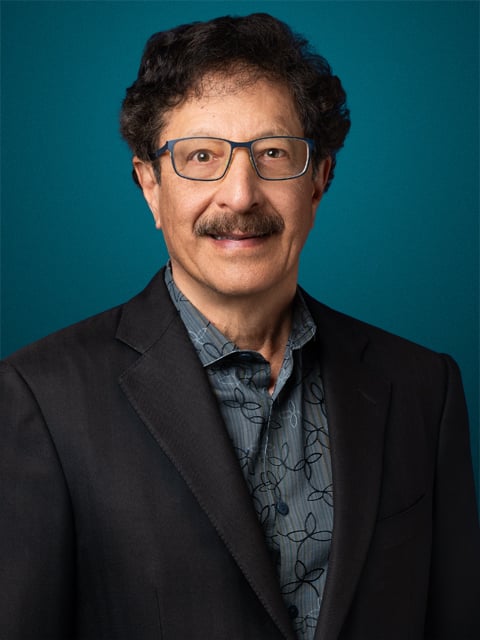
Throughout his career, Robert has combined detailed knowledge of laws and regulations, high standards and a willingness to work long hours to find solutions to intrinsically challenging problems.
Advancing Federal/State/Tribal Relations
Robert has been instrumental in finding solutions to difficult issues on how the Federal government, States and Indian Tribes work together on coal mining reclamation.
Robert drafted and negotiated cooperative agreements with six states that resolved a dispute that arose over the extent of state authority to regulate surface coal mining reclamation on federal lands. The Congress adopted the cooperative agreement model in Section 525 of the Surface Mining Control and Reclamation Act of 1977.
Robert resolved disputes between the Office of Surface Mining Reclamation and Enforcement and states seeking to obtain approval for primacy under the Surface Mining Control and Reclamation Act.
As Director of the Office of Surface Mining Reclamation and Enforcement, Robert used a vision of “Shared Commitment” to improve contentious relations between his agency and the states and signed an agreement of Shared Commitment with the National Association of Abandoned Mine Land Programs.
Robert settled a lawsuit filed by the Navajo and Hopi Tribes who objected to a 1989 regulation that said the Department of the Interior had the sole authority to regulate coal mining on Indian Lands and recognized their inherent Tribal sovereignty.
Addressing Difficult Legal Issues
Robert has enjoyed working on resolving high stakes legal issues.
Robert researched and drafted regulations to define the proper standards for the Bureau of Land Management to review 183 applications for preference right coal leases on 496,000 acres of land that contained more than 12 billion tons of coal. The regulations were upheld in NRDC v. Berklund, 609 F.2d 553 (D.C. Cir. 1979).
Robert provided the legal guidance for preparing a Programmatic Environmental Impact Statement under the National Environmental Policy Act to evaluate the effects of adopting a new federal coal-leasing program. He was also a primary author and reviewer of the document.
Robert defended the Surface Mining Control and Reclamation Act against existential challenges to its implementation. The courts rejected cases alleging that the Surface Mining Control and Reclamation Act violated the Fifth and Tenth Amendments of the United States Constitution, Hodel v Virginia, 452 U.S. 264 (1981); Hodel v. Indiana, 452 U.S. 314 (1981) and rejected a “bet the agency” challenge to the agency’s authority to set standards for state programs beyond the bare minimums specified in the SMCRA. In Re Permanent Surface Mining Regulation Litigation, Appeal of Peabody Coal, 653 F.2d 514 (D.C. Cir. 1981)(En Banc), denied, 454 U.S. 822 (1981).
Robert worked closely with the Army Corps of Engineers on the Special Area Management Plan for the San Diego Creek Watershed, the first watershed-wide comprehensive permitting plan in California for issuance of Section 404 permits.
Robert developed an innovative, comprehensive approach to complying with the Environmental Protection Agency’s Section 404(b)(1) Guidelines. The approach was approved in Friends of the Santa Clara River v. Army Corps of Engineers, 887 F.3d 906 (9th Cir. 2018), a case involving a Section 404 permit for the Newhall Ranch, a 20,000 home master planned net zero carbon emissions community.
Robert drafted the Organic Trade Association’s comments on the Department of Agriculture’s proposed National Organic Program regulations. The comments lead to the Department’s decision to reverse its proposal to allow use of sewage sludge and genetically modified organisms in production and use of irradiation in processing of organic food.
Promoting Habitat Conservation As Part of Development
Robert has helped conserve habitat for endangered species and worked on many key habitat conservation activities in both Northern and Southern California.
Robert advice on the proposed listing of the California Gnatcatcher under the state and federal endangered species acts started the development community on the path that led to the passage of the State of California’s Natural Community Conservation Program and the development of multiple multi-species habitat conservation plans in Central and Southern Orange County, San Diego and Riverside and other jurisdictions.
Robert led the team that prepared a Habitat Conservation Plan the El Sobrante Landfill in Riverside County covering two federally listed species and 29 other species of concern. The El Sobrante HCP was one of the first Habitat Conservation Plans in the country to comply with the Fish and Wildlife Service’s five-point policy, which required increased rigor.
Robert negotiated a Candidate Conservation Agreement for the Newhall Ranch with the Fish and Wildlife Service to support the conservation of the San Fernando Valley spineflower, a tiny plant once believed to be extinct in southern California.
Robert led a team that developed a plan for a six-mile long wildlife corridor through the Great Park to link the Cleveland National Forest to the Laguna Coast. The plan fulfilled a decades long effort by a coalition of conservation groups led by the Laguna Greenbelt.
In Northern California, Robert advised companies on the development and approval of mitigation banks and helped his clients place conservation easements on land to protect wetlands, and endangered species like the California red-legged frog, the California Tiger Salamander, vernal pool fairy shrimp, vernal pool tadpole shrimp, the Alameda whipsnake, the Mission Blue butterfly, the Bay Checkerspot butterfly, burrowing owl and western pond turtle.
Improving Government Programs
Robert provided leadership and direction for the Office of Surface Mining Reclamation and Enforcement.
Robert started the Acid Mine Drainage Technology Initiative to develop technical standards to stop new mines from becoming a source of acid mine drainage. His work on the Appalachian Clean Streams Initiative served as a catalyst for the funding of hundreds of projects that have restored thousands of miles streams polluted by acid mine drainage.
Robert successfully defended the agency’s right to provide a federal backstop when state agencies failed to enforce the law under state primacy programs, defeating two bills, S. 1401 and H.R. 2372, which sought to remove this enforcement authority.
Robert issued policy guidance that made it easier for private companies to voluntarily reclaim abandoned coal refuse piles.
Robert issued a new mission and vision statement, streamlined agency processes and enhanced employee productivity by eliminating layers of unnecessary reviews and carrying out reviews under the Government Results and Performance Act to improve financial performance.
Helping Clients Seeking Government Approvals
Robert has helped evaluate and comply with the complex requirements of the National Environmental Policy Act, the Clean Water Act, the Endangered Species Act, the California Fish and Game Code, among other laws.
Robert has worked on hundreds of housing, commercial, recreational, master planned, solar, landfill, sand and gravel mines and land exchanges projects primarily located in California, but he also worked on projects in Guam, Nevada, New Mexico, Colorado and Mississippi.
Robert secured permits for housing developments and master planned communities in dozens of California jurisdictions. Projects include the Windemere Ranch, the Gale Ranch, Alamo Creek, the Newhall Ranch, the Great Park, Spectrum 5, Spectrum 6, Quail Hill, Orchard Grove, Shady Canyon, Turtle Ridge and Portola Springs.
Robert also secured permits for the San Juan Capistrano High School, Coast Rock Products Sand and Gravel Mine and several landfills.
Two of his projects were among the first new solar generation projects in Imperial County.